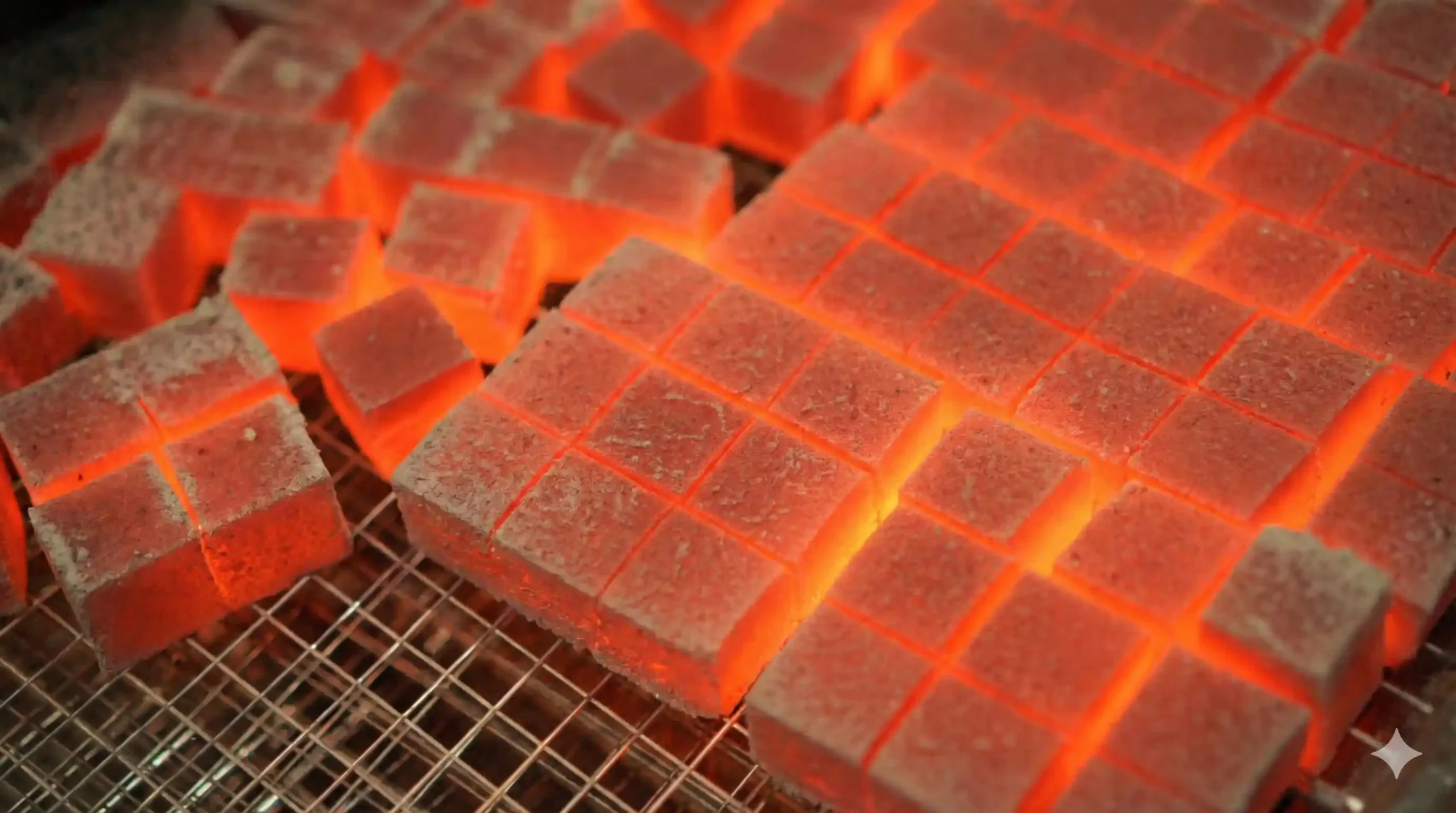
Differences Between Coconut and Wood Hookah Charcoal
If you have ever wondered about the differences between coconut and wood hookah charcoal, you are not alone. Many hookah users pick whichever charcoal is cheapest or most available without thinking twice. However, charcoal choice matters more than most people realize. In fact, it shapes the flavor, the heat consistency, and the length of every session you have.
Both types have their place in hookah culture. Nevertheless, they perform very differently. Therefore, understanding these differences helps you decide which one suits your smoking habits best.
How Coconut and Wood Hookah Charcoal Are Made
Wood charcoal comes from burning organic materials like bamboo, oak, or other hardwoods inside high-temperature kilns. As a result, the product is porous and lightweight, and it catches fire quickly.
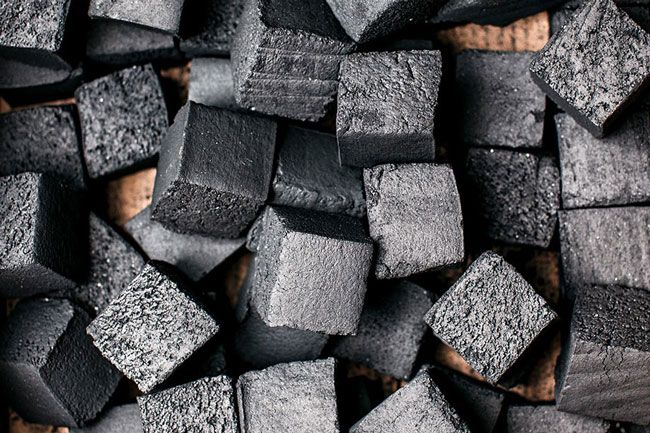
Coconut shell charcoal, on the other hand, comes from the shells of mature coconuts. These shells are a natural byproduct of coconut farming. They are dense and hard by nature, and that density carries over into the finished charcoal. Manufacturers carbonize the shells at high temperatures. Consequently, the end product is far denser and harder than anything wood-based charcoal can offer.
It is also worth noting that the quality of raw materials plays a big role in the final product. Coconut shells from fully mature coconuts produce better charcoal than shells harvested too early. Similarly, the type of wood used in wood charcoal affects how it burns, but neither comes close to the consistency that properly processed coconut shell charcoal delivers.
Heat Output Differences in Hookah Charcoal Types
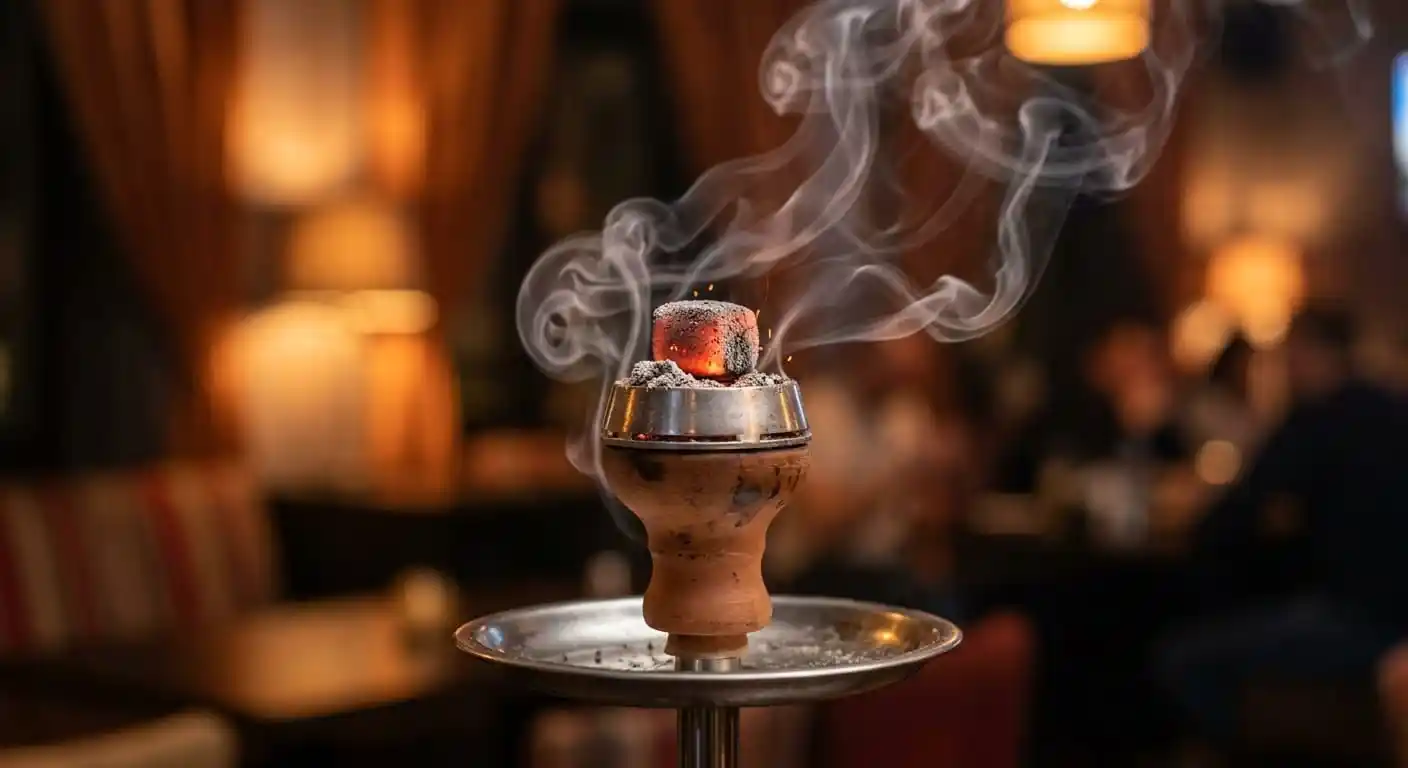
Heat output is where these two products differ most noticeably during a real session. Wood charcoal burns hot and fast. It reaches peak temperature quickly. However, the heat spikes early and then fades. Because of this, temperature management becomes difficult. Users often struggle to maintain the ideal heat window throughout the session.
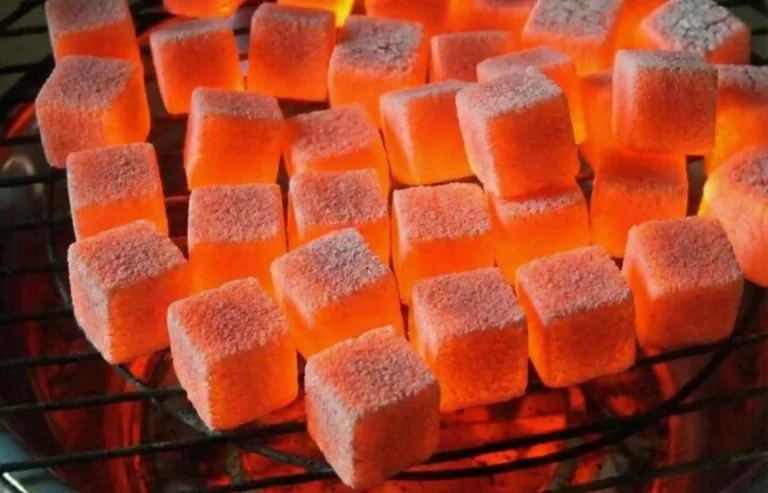
Coconut shell charcoal, in contrast, takes longer to reach full heat. Once it does, though, it holds that temperature steadily. A single cube can last 45 to 60 minutes. Wood charcoal rarely matches that burn time. Therefore, for anyone who wants a consistent and uninterrupted session, coconut charcoal is clearly the stronger choice. Additionally, stable heat means you spend less time adjusting and more time enjoying the session.
Flavor Differences Between Coconut and Wood Charcoal
This is where the differences between coconut and wood hookah charcoal become most obvious to experienced smokers. Wood charcoal, especially quick-light varieties, carries its own flavor into the smoke. Many quick-light products use chemical accelerants. As a result, these chemicals leave a metallic or chemical taste in the early minutes of the session. Even additive-free wood charcoal can introduce subtle smoky notes that mix with your tobacco.
Coconut shell charcoal, however, burns clean. It does not add any noticeable taste to your smoke. Moreover, the dense shell material and thorough carbonization leave very little residue behind. Consequently, you taste your shisha tobacco exactly as it should be. This is especially important with fruit or floral flavors, where any outside interference is immediately obvious.
If you want to experience truly neutral-tasting hookah charcoal, Coconut shell charcoal is widely considered the gold standard among regular hookah users around the world.
Ash Production in Coconut vs Wood Hookah Charcoal
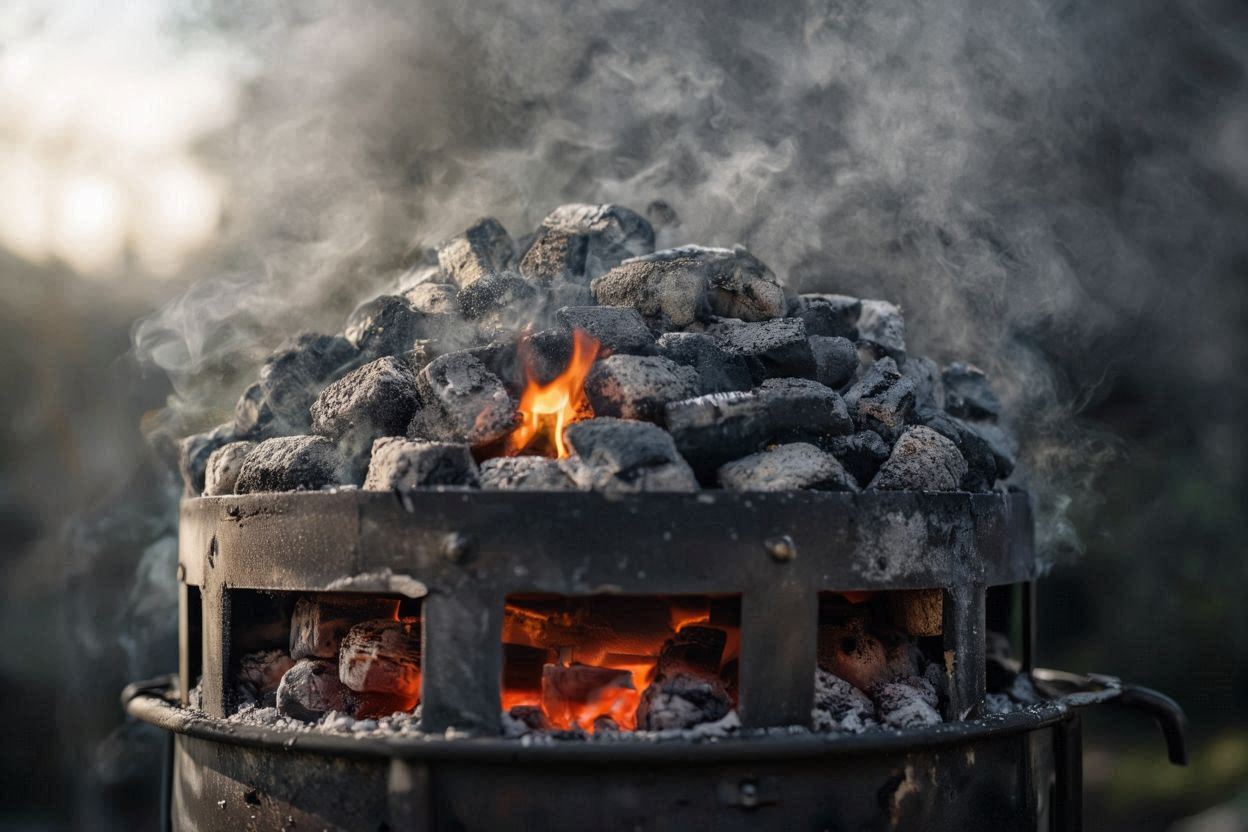
Wood charcoal breaks apart easily during a burn. Furthermore, it produces a significant amount of ash. That ash falls onto the foil or into the bowl, which blocks airflow and can make the smoke taste bitter. As a result, users need to remove ash regularly, which constantly interrupts the session.
Coconut shell charcoal, by contrast, holds its shape throughout the burn. It produces far less ash, and the residue stays compact rather than scattering. Therefore, sessions stay cleaner with much less hands-on management. Beyond the mess factor, excessive ash also clogs the small holes on the foil that allow heat to transfer properly. This is one of the hidden reasons why wood charcoal sessions often feel harsh toward the end.
Environmental Differences Between Coconut and Wood Charcoal
Wood charcoal production puts significant pressure on forest resources. In many regions, hardwood forests face unsustainable harvesting. Even bamboo charcoal, despite faster regrowth, still requires land and ongoing resources.
Coconut shell charcoal, on the other hand, uses material that already exists as agricultural waste. Farmers discard coconut shells after harvesting the fruit. Therefore, turning those shells into charcoal requires no additional land clearing. Furthermore, it gives new purpose to material that would otherwise burn or rot.
Dedicated producers like indobriquettescharcoal source their shells directly from coconut farming regions. As a result, the supply is abundant and the environmental impact is significantly lower. Consequently, buyers who care about sustainability have a clear reason to choose coconut charcoal over wood.
Lighting Convenience in Wood vs Coconut Hookah Charcoal
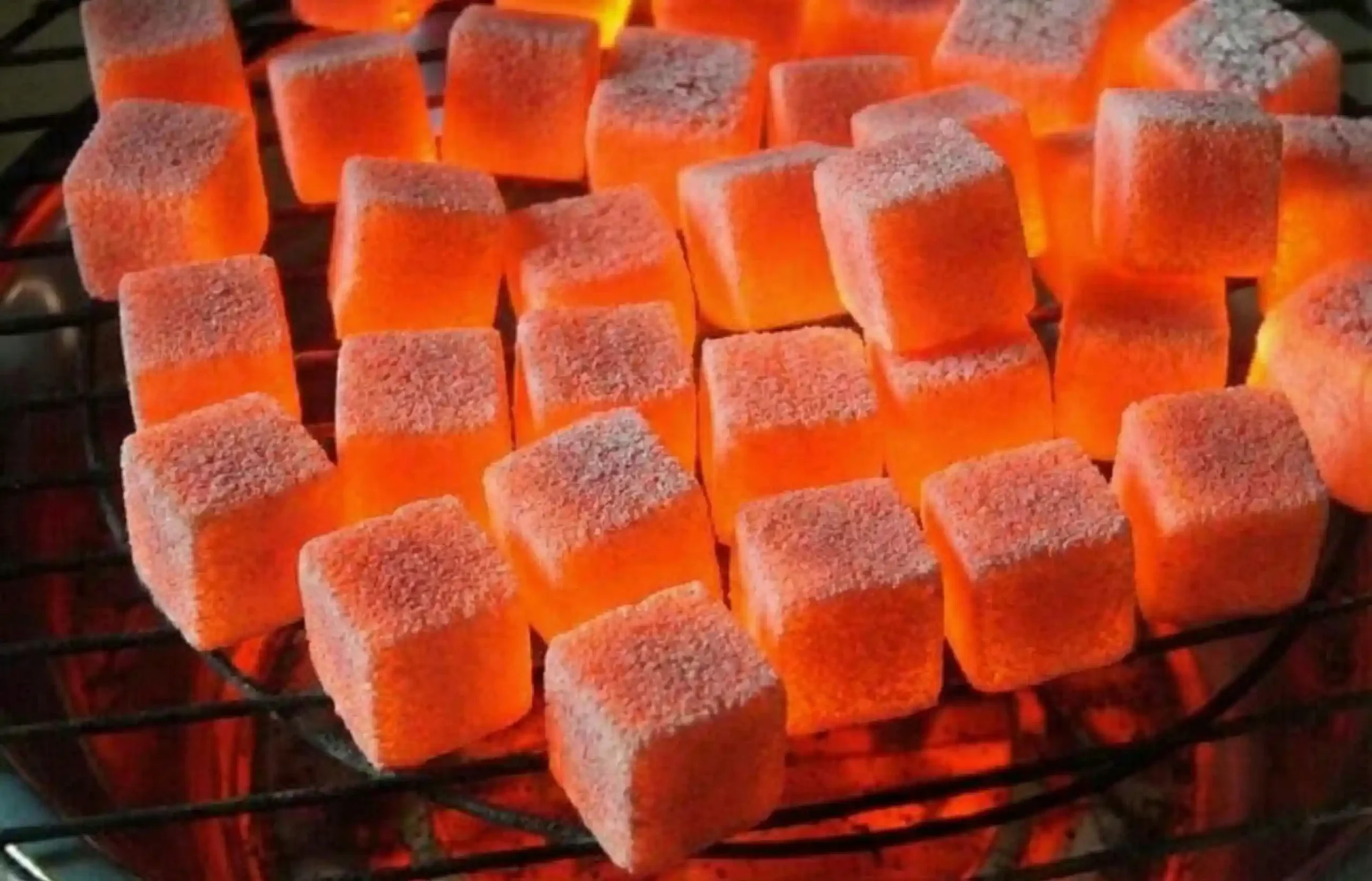
Quick-light wood charcoal ignites with a match or lighter in seconds. As a result, users with no burner or coil heater can still get a session going fast. This is a genuine convenience advantage that coconut charcoal cannot match in terms of speed.
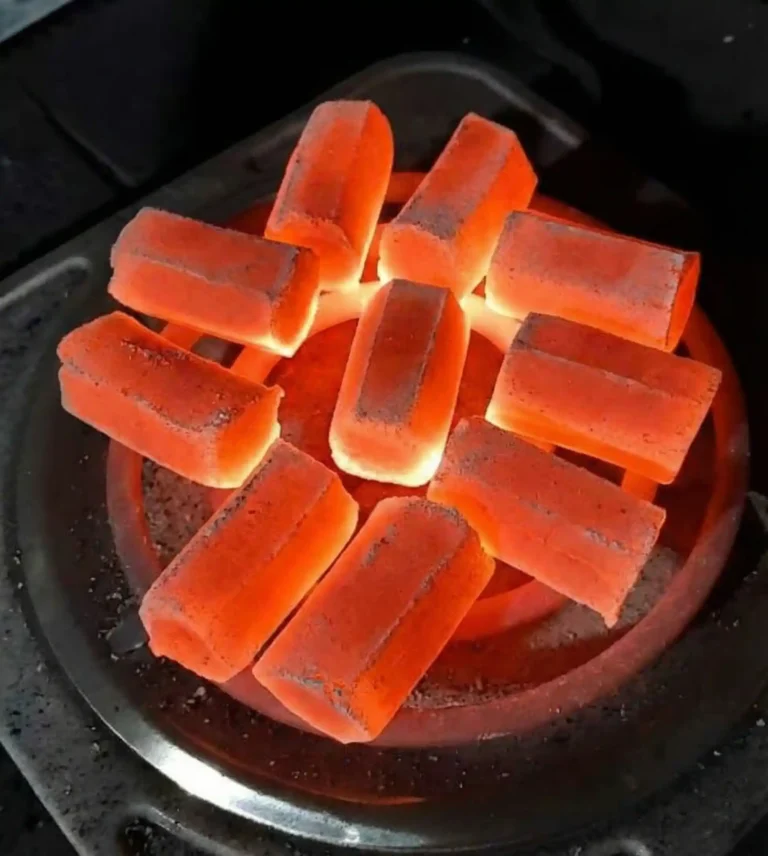
Coconut shell charcoal, however, needs a coil burner or electric stove to light properly. Full ignition typically takes three to five minutes. For regular users who already own the right equipment, this is not a major issue. Nevertheless, it is worth knowing before you buy. Most serious hookah users accept the short wait without complaint, because the quality difference more than justifies it.
It is also helpful to invest in a good quality coil burner if you plan to use coconut charcoal regularly. A reliable burner heats the cubes evenly and reduces the chances of getting partially lit charcoal, which can cause uneven heat distribution during the session. In the long run, pairing quality charcoal with quality equipment makes a noticeable difference to every hookah session you have.
Carbon Monoxide Output in Hookah Charcoal
All charcoal produces carbon monoxide during combustion. However, the amount depends on the charcoal’s composition and overall quality. Quick-light wood charcoals with chemical additives release higher CO levels, especially in the first few minutes of burning. Additive-free wood charcoal performs somewhat better, but incomplete combustion is still more common due to the porous structure.
Coconut shell charcoal, in contrast, burns more completely. The dense structure supports efficient combustion. Consequently, this results in lower CO output per session compared to wood-based alternatives. For this reason, many health-conscious hookah users have made the switch to coconut charcoal as a practical step toward a cleaner smoking experience.
Long-Term Cost Differences Between Both Charcoal Types
Coconut shell charcoal costs more upfront per kilogram. Because of this, many buyers reach for the cheaper wood option instead. However, the math changes significantly when you calculate cost per session. Coconut charcoal burns longer, so you use fewer pieces per session.
As a result, a bag that costs more at first often provides significantly more sessions than a cheaper wood charcoal bag of the same weight. Regular users almost always find coconut charcoal more economical over time. It is also worth considering the indirect costs of using lower-quality charcoal. Frequent charcoal changes waste time, and ash management with wood charcoal often means going through more foil and cleaning the bowl more frequently.
What to Look For When Buying Hookah Charcoal
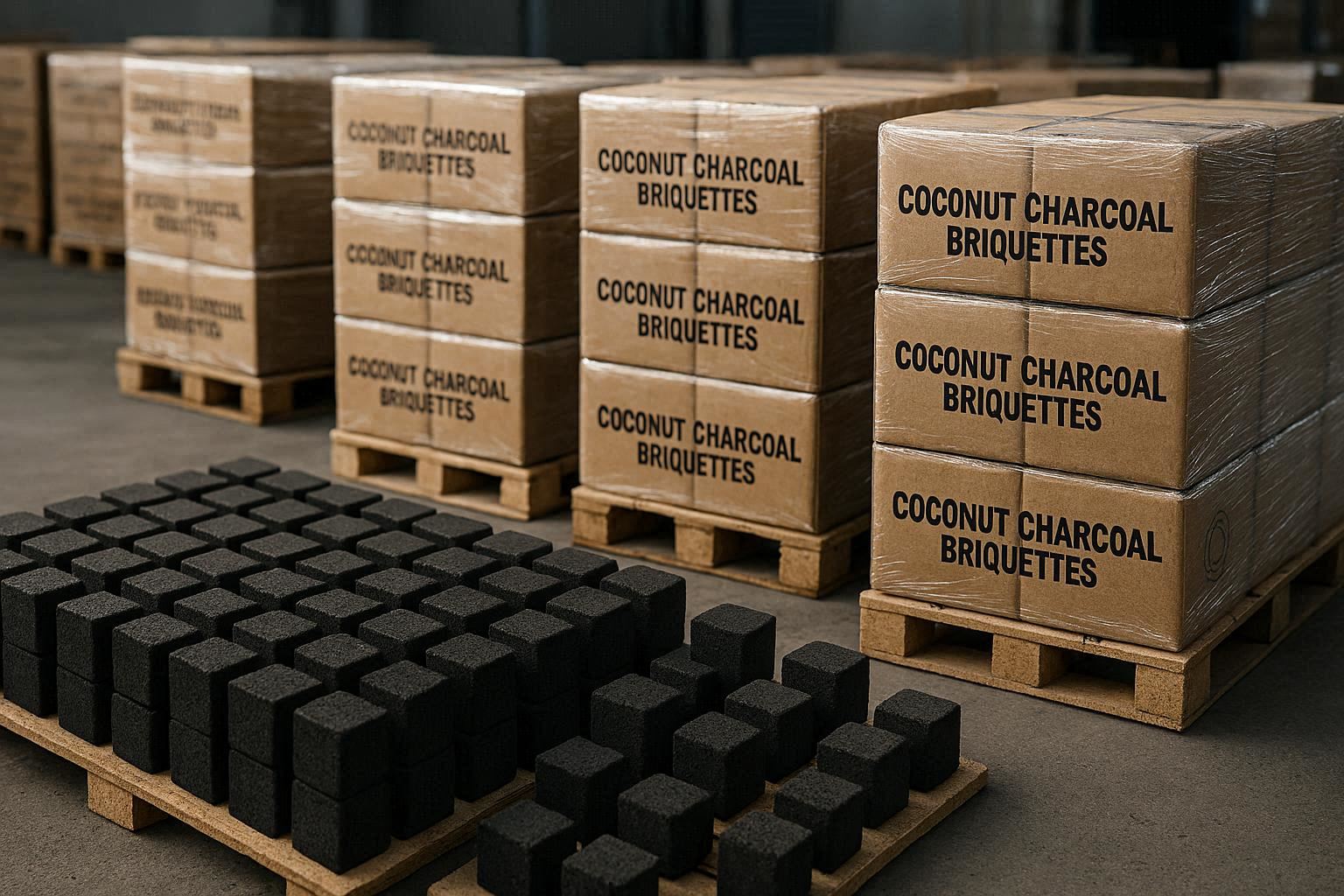
Not all coconut shell charcoal is created equal. Therefore, knowing what to look for before purchasing can save you time and money in the long run.
First, look for charcoal that uses 100 percent coconut shell as its raw material. Some products blend coconut shell with other materials to cut costs, which affects burn quality and flavor neutrality.
Second, check the shape and density of the cubes. Well-made coconut charcoal should feel heavy for its size and have a consistent dark color throughout. Third, consider the source. Charcoal produced in regions with established coconut industries, such as Indonesia and the Philippines, tends to be more reliable.
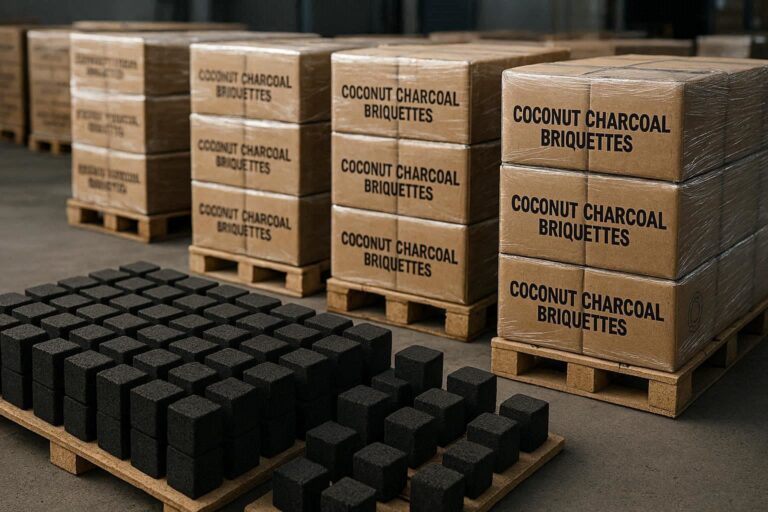
For a trusted and reliable source of premium coconut shell charcoal, Coconut shell charcoal from indobriquettescharcoal is worth exploring. Their products consistently meet the standards that serious hookah users look for. As a result, they outperform generic alternatives sold through mass-market channels.
Conclusion
Overall, the differences between coconut and wood hookah charcoal go far beyond price and packaging. In fact, they affect every part of the experience, from the first light to the final exhale. Wood charcoal offers speed and convenience, but it consistently falls short on flavor, heat consistency, ash management, and environmental impact.
Coconut shell charcoal, on the other hand, leads in almost every category that matters to regular hookah users. It burns cleaner, lasts longer, tastes better, and comes from a sustainable source. Furthermore, the slightly longer lighting time and higher upfront cost are minor trade-offs compared to the overall improvement in session quality.
In conclusion, for anyone serious about their hookah experience, Coconut shell charcoal is not just the better option. It is, ultimately, the only choice that makes real sense in the long run. For more information about premium coconut charcoal products, visit indobriquettescharcoal and explore what responsible, high-quality charcoal production looks like in practice.