Cube charcoal for hookahs Production process and quality standards
Shisha charcoal cubes are a biomass product produced by heating organic materials such as coconut shells or wood in a low-oxygen environment. This process produces a solid charcoal that can retain heat for a long time, making it suitable as an alternative heat source in several industrial applications.
In the industrial field, the term “cube charcoal for hookah” is used as a technical designation referring to charcoal formed into cubes of standard sizes, which is a description of the shape and technical characteristics and not an invitation to use hookah. This type is designed to be compact, strong, and have a stable burning time suitable for various thermal uses.
Its role is not limited to one field, as cubed charcoal is used in multiple sectors such as cooking, which requires balanced heat, heating in laboratories, portable stoves, and industrial thermal applications. Thanks to its stability and low ash content, it has become a product in increasing demand in global alternative energy markets.
What is meant by charcoal cubes for hookahs?
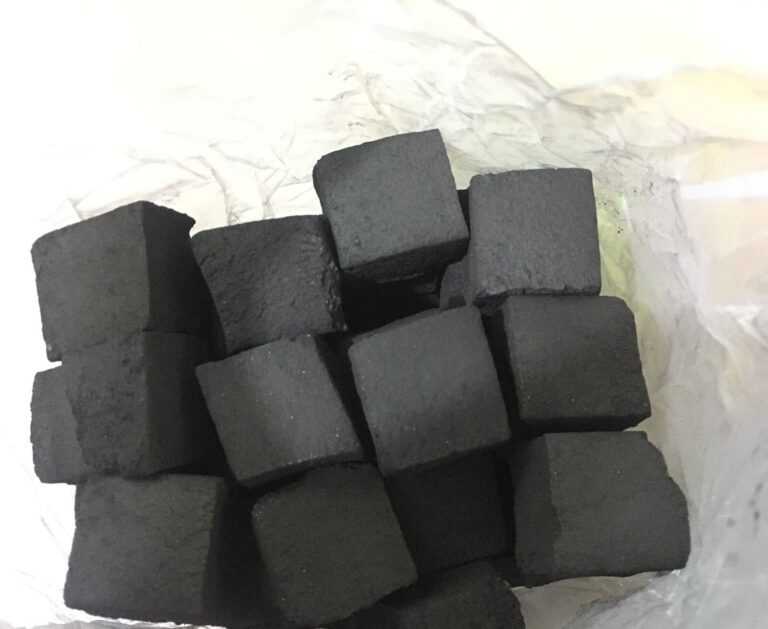
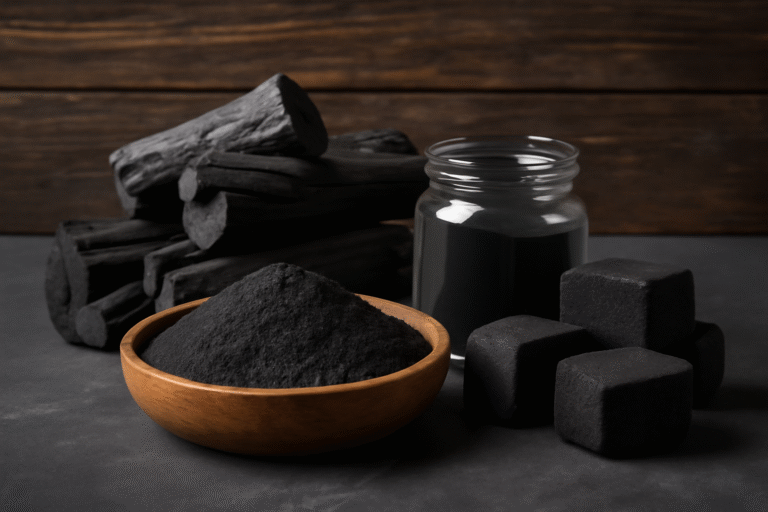
Cube charcoal is charcoal shaped into cubes with standard dimensions, usually ranging from 20 to 27 mm. This shape is chosen to ensure even heat distribution, ease of arrangement, and durability during transport.
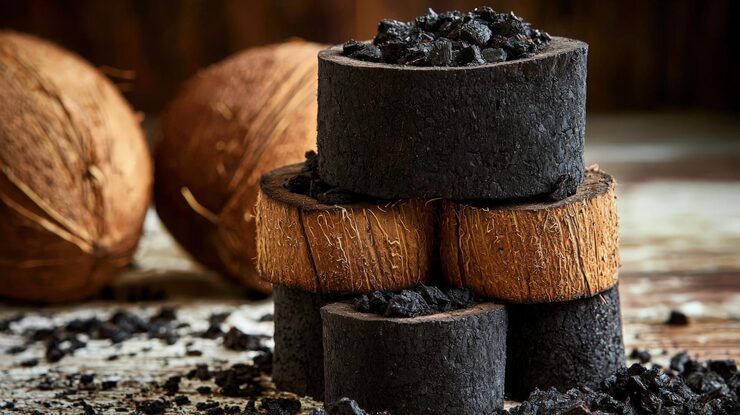
The raw material is often extracted from coconut shells due to their hardness and ability to produce high-quality charcoal with little ash. Some factories also use types of legal wood or other well-dried biomass.
The cube shape helps achieve stable heat, easy arrangement, and high efficiency in technical or culinary uses.
The production process of charcoal briquettes
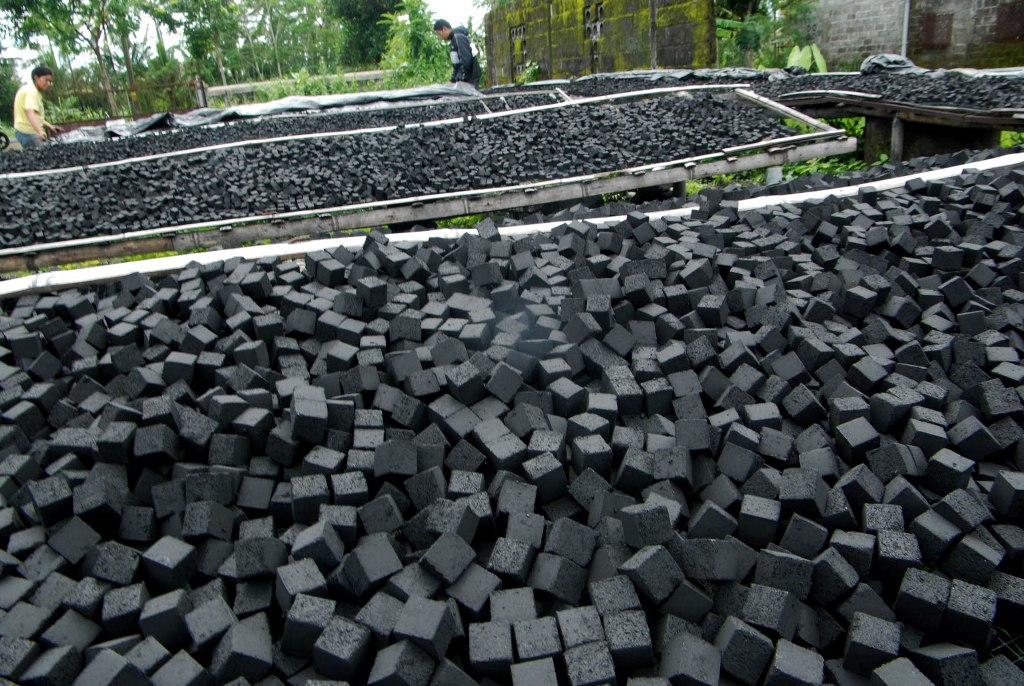
Before briquettes achieve their compact, uniform shape and stable quality as known in the market, the product goes through several lengthy production stages. Every step, from the selection of raw materials to the final drying stage, has a significant impact on the performance of the briquettes when used. Therefore, producers must follow a rigorous production process to ensure that the final result meets biomass industry standards.
1. Collection and selection of raw materials
Raw materials such as coconut shells are selected to be dry, clean, and free of contaminants. The quality of the raw materials greatly affects the quality of the final charcoal, so a careful selection process is carried out to ensure the production of charcoal that is more cohesive, stable, and has a low ash content.
2. Carbonization/gradual burning
The raw materials are heated in closed, low-oxygen furnaces until they turn into charcoal. This gradual process produces charcoal that is compact and produces little waste. The heat is also controlled regularly to ensure even combustion, reduce smoke, and produce charcoal with a strong structure and a more uniform color.
3. Grinding, mixing, and shaping
The resulting charcoal is ground into a fine powder, then mixed with water and natural binding agents such as tapioca starch. The mixture is then pressed using high-pressure machines to form cubes.
At this stage, density and compression are key factors in ensuring that each cube is uniform in shape, crack-resistant, and capable of delivering a stable and balanced burn time.
4. Drying
Charcoal cubes are dried in industrial ovens to reduce moisture content. Proper drying results in stronger charcoal that is less prone to cracking. Controlling the temperature and duration of drying is important to ensure that every side of the cubes is dry, prevent mold caused by moisture, and improve combustion performance in various technical applications.
5. Factory standards
Before packaging, coal is inspected according to several criteria such as strength, ash content, and combustion duration. Only coal that is compact and stable is accepted. In addition, some factories check the size, color, and density level to ensure that each cube is uniform. These tests ensure that the product is safe, meets industry standards, and is ready for use in various heating applications.
Quality standards for industrial-use charcoal briquettes
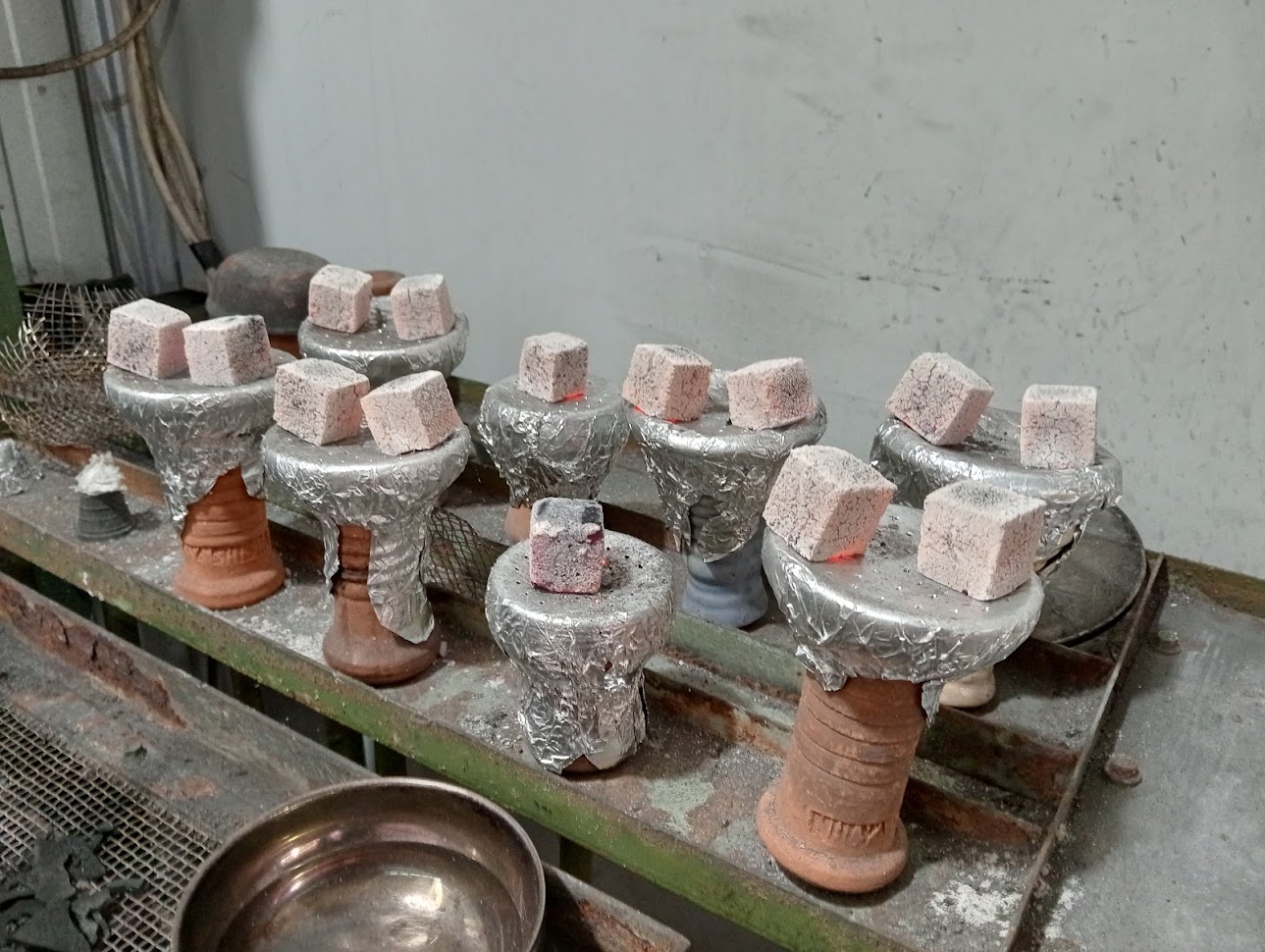
After undergoing a lengthy production process, charcoal briquettes must meet a series of quality standards before they can be used in various industrial applications. These standards are designed to ensure that the charcoal has consistent and safe combustion performance that complies with approved technical requirements. Therefore, quality assessment is not based solely on external appearance, but also includes composition, combustion duration, and the level of cleanliness of the resulting residues.
1. Ash content
High-quality coal has a low ash content. The less ash there is, the cleaner the coal burns. Low ash also helps maintain stable heat and reduces the need for cleaning, making it more efficient for various industrial uses.
2. Heat resistance
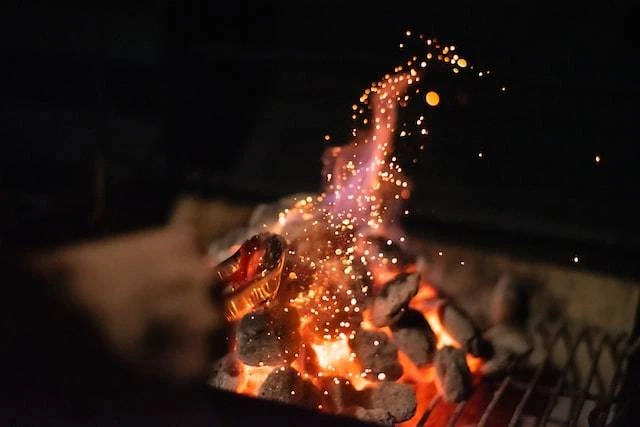
Coal must be able to produce consistent heat for a long period of time without crumbling. Good heat resistance helps achieve more stable combustion and prevents the coal from extinguishing quickly, in addition to remaining intact even during prolonged use in various heating processes.
3. Combustion duration
High-quality products have a long burning time, which is determined by the density and quality of the raw materials. A longer burning time leads to more efficient use, saving coal and maintaining a stable temperature without the need for constant replacement.
4. Free from harmful chemicals
Good charcoal should be free of additives such as fragrances or industrial chemicals, making it safer as a heat source. Pure charcoal helps achieve stable combustion without strange odors and reduces the risk of residues that may affect the quality of use.
5. Certificates
Some manufacturers adhere to standards such as ISO or conduct laboratory tests to ensure emission levels and charcoal quality in accordance with applicable regulations. These certifications are proof that the production process is regular, safe, and compliant with international standards, which enhances user confidence in the quality and safety of the product.
Safety and Environmental Impact
The coal industry must adhere to sustainability principles to reduce its environmental impact.
-
Sustainable raw material sources
Using coconut shells or legal wood preserves nature and reduces tree felling. -
Environmental impact
Coal production can cause pollution if not managed properly, so modern plants use closed combustion systems to reduce emissions. -
Use of biomass residues
The use of coconut husks contributes to reducing agricultural waste and increasing economic value. -
Safety Awareness
Charcoal should be used in well-ventilated areas to reduce exposure to smoke.
تنوع منتجات فحم المكعبات في الأسواق
Charcoal cubes are available in different sizes, such as 20 mm, 22 mm, 25 mm, and 27 mm. The size affects the burning time and amount of heat.
Coconut shell charcoal typically has a higher density, longer burn time, and less ash compared to charcoal made from wood.
Tips for choosing high-quality charcoal
-
Attention to durability
-
Verification of certificates
-
Avoid charcoal containing artificial additives.
-
Store in a dry, closed place.
Trends in the charcoal briquette industry
-
Growing global demand
The need for cleaner, more sustainable energy sources is increasing. -
Exports from Indonesia
Indonesia is one of the world’s largest producers of coconut shell charcoal. -
Innovation
Developing lower-emission, denser charcoal and more environmentally friendly production processes.
Summary
Cubed charcoal, including hookah charcoal cubes, is a cohesive and stable biomass product suitable for various industries. Criteria such as low ash content, long burning time, and raw material safety directly affect product quality and thermal performance. Indobrikets Partakhal is one of the producers that focuses on these criteria to ensure high and stable quality.
Relying on sustainable raw materials and controlled production processes, the charcoal industry has significant economic opportunities, especially in biomass-rich countries such as Indonesia, making charcoal briquettes a high-value product in global markets.