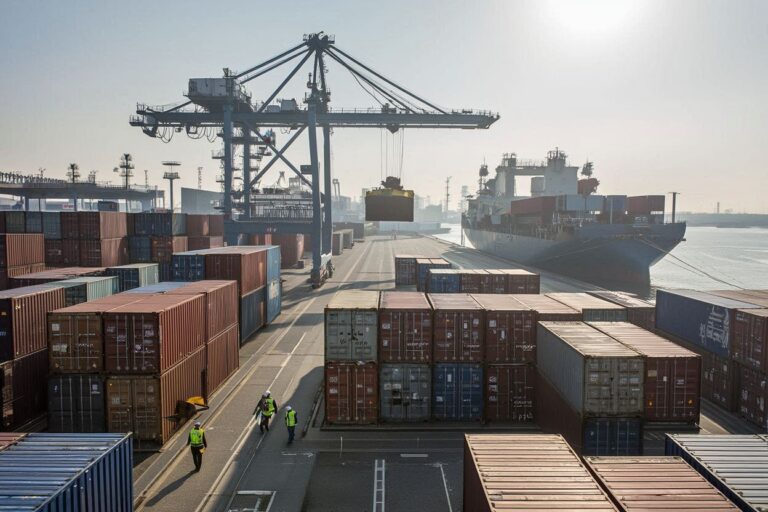
Renewable energy from coconut waste is an innovative approach to transforming agricultural by-products into sustainable energy sources. This concept focuses on utilizing materials such as coconut shells, husks, and residues to produce energy through various processes like biomass combustion and biogas production. As global energy demand continues to rise, the need for cleaner and more sustainable alternatives has become increasingly urgent.
In the modern era, renewable energy plays a crucial role in reducing dependence on fossil fuels and minimizing environmental impact. Traditional energy sources contribute significantly to carbon emissions, which drive climate change and environmental degradation. By contrast, renewable energy solutions offer a cleaner, more sustainable pathway for meeting energy needs while preserving natural resources.
Globally, many countries are actively exploring biomass energy as part of their renewable energy strategies. Indonesia, as one of the largest coconut-producing countries in the world, holds significant potential in developing renewable energy from coconut waste.
With abundant raw materials and growing technological support, coconut waste can be transformed into a valuable energy resource that supports both environmental sustainability and economic development.
Types of Coconut Waste Used for Energy Production
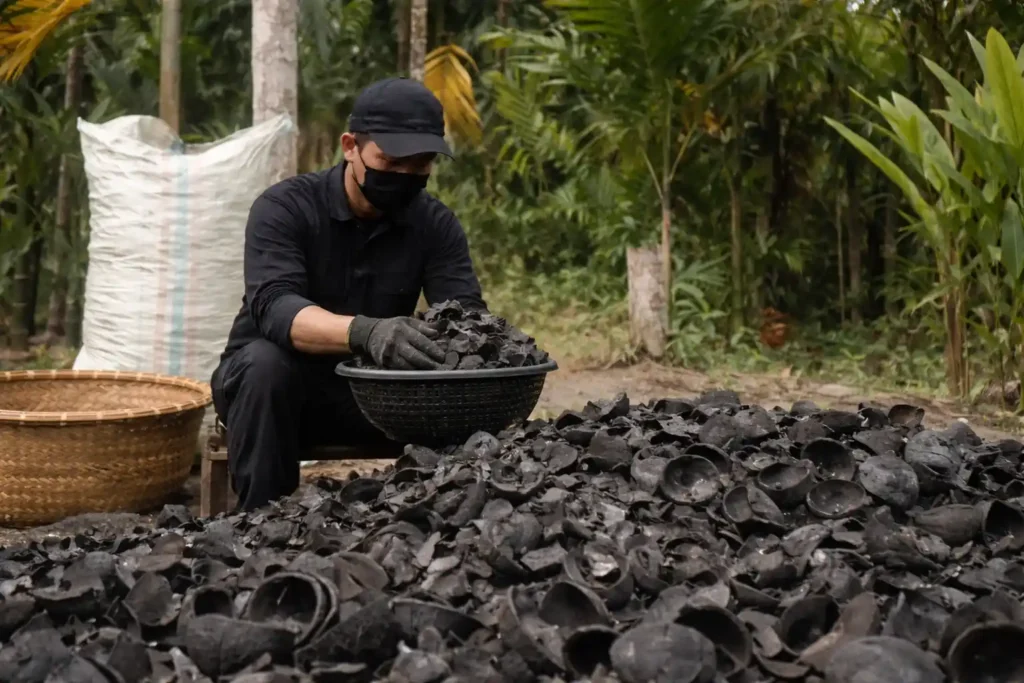
Coconut waste consists of several components that can be effectively converted into renewable energy. Each type of waste has unique physical and chemical characteristics, making it suitable for different energy production methods. By utilizing these materials, renewable energy from coconut waste can be optimized for both efficiency and sustainability.
1. Coconut Shells
Coconut shells are one of the most valuable forms of coconut waste for energy production. They have a high calorific value, which means they can produce a significant amount of heat when burned.
This makes them highly suitable for direct combustion and for processing into charcoal briquettes. One of the most widely used products derived from coconut shells is coconut shell charcoal briquettes, which are known for their high heat efficiency, low ash content, and eco-friendly properties. Due to their density and energy content, coconut shells are widely used as a reliable biomass fuel in both household and industrial applications.
2. Coconut Husks
Coconut husks are rich in fiber and are commonly used in various industries. In terms of energy production, their high lignocellulosic content makes them a promising alternative fuel source.
Although they produce less heat compared to coconut shells, husks can still be utilized in biomass energy systems, especially when processed into pellets or used in combination with other materials.
3. Coconut Residue
Coconut residue, which is the by-product of coconut milk or oil production, is another important resource. This organic waste can be processed through anaerobic digestion to produce biogas. The methane generated from this process can be used as a clean and renewable energy source, particularly in rural and small-scale applications.
Technologies for Renewable Energy from Coconut Waste
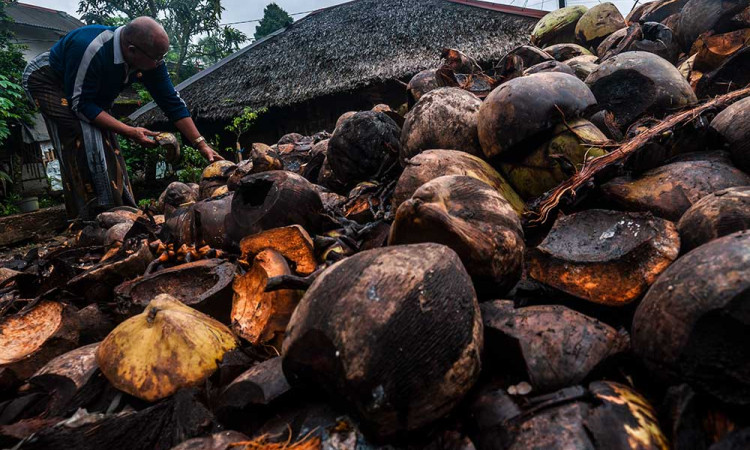
The development of renewable energy from coconut waste relies on various technologies that convert organic materials into usable energy forms. These technologies range from simple traditional methods to advanced modern systems, enabling efficient utilization of coconut by-products for sustainable power generation.
1. Biomass Combustion from Coconut Waste Energy
Biomass combustion is the most straightforward method used in converting coconut waste into energy. This process involves the direct burning of materials such as coconut shells and husks to produce heat.
It is widely used in small-scale industries, particularly in rural areas, due to its low cost and simple implementation. The heat generated can be utilized for cooking, drying agricultural products, or powering small boilers.
2. Biogas Production Using Coconut Waste
Biogas production is another effective technology for renewable energy from coconut waste. It involves the anaerobic fermentation of coconut residue, such as leftover pulp from coconut milk or oil processing.
In this process, microorganisms break down organic matter in the absence of oxygen, producing methane-rich gas. This biogas can be used as a clean fuel for cooking, heating, or electricity generation, making it suitable for household and community-scale applications.
3. Biofuel Conversion from Coconut Waste
Biofuel conversion focuses on producing liquid fuel from coconut-derived materials. Coconut oil, including oil extracted from waste, can be processed into biodiesel through a chemical process known as transesterification.
The resulting biodiesel can be used as an alternative to conventional diesel fuel. This technology offers a cleaner combustion process and contributes to reducing greenhouse gas emissions.
4. Gasification and Pyrolysis of Coconut Waste for Energy
Gasification and pyrolysis are advanced technologies used to maximize the energy potential of coconut waste. Gasification converts biomass into syngas, a mixture of combustible gases that can be used for electricity generation.
Meanwhile, pyrolysis involves heating coconut waste in the absence of oxygen to produce bio-oil, biochar, and gas. These modern approaches provide higher efficiency and better environmental performance compared to traditional methods.
Benefits of Renewable Energy from Coconut Waste
The use of renewable energy from coconut waste offers a wide range of environmental, economic, and sustainability benefits. As global awareness of clean energy continues to grow, utilizing agricultural waste like coconut by-products becomes an effective strategy to support greener energy systems.
One of the main advantages is its environmentally friendly nature. Converting coconut waste into energy helps reduce greenhouse gas emissions compared to fossil fuels. It also minimizes environmental pollution by preventing the accumulation of organic waste that would otherwise decompose and release harmful gases.
In addition, renewable energy from coconut waste plays a significant role in waste reduction. Coconut shells, husks, and residues are often discarded or burned inefficiently. By transforming these materials into useful energy, waste management becomes more efficient and sustainable.
Another important benefit is its contribution as a sustainable energy source. Coconut waste is renewable and widely available, especially in tropical regions, making it a reliable long-term energy solution. Unlike fossil fuels, it can be continuously produced without depleting natural resources.
Furthermore, it provides additional economic value. The utilization of coconut waste opens new business opportunities, supports local industries, and creates jobs in rural communities. This not only improves energy access but also enhances economic development at the local level.
Economic and Environmental Impact
Renewable energy from coconut waste has a significant impact on both the economy and the environment. At the local level, it creates new economic opportunities by turning low-value agricultural waste into profitable energy resources. Communities in coconut-producing regions can benefit from additional income streams through the production and sale of biomass fuel, briquettes, or biogas.
This also opens up business opportunities for small and medium enterprises (SMEs). Entrepreneurs can develop sustainable businesses around coconut waste processing, energy production, and distribution. As a result, it supports job creation and strengthens the local economy.
From an environmental perspective, renewable energy from coconut waste contributes to reducing carbon emissions. By replacing fossil fuels with biomass-based energy, the overall carbon footprint is significantly lowered. Additionally, proper waste utilization helps prevent open burning and reduces environmental pollution, supporting a cleaner and more sustainable ecosystem.
Challenges in Implementing Coconut Waste Energy
Despite its strong potential, the implementation of renewable energy from coconut waste still faces several challenges. One of the main obstacles is the limitation of technology, especially in rural areas where access to modern energy conversion systems such as gasifiers or biogas digesters is still limited. This often results in inefficient utilization of available coconut waste.
Another significant challenge is the high initial investment required to develop infrastructure and adopt advanced technologies. Small communities and local businesses may find it difficult to allocate sufficient capital, which slows down large-scale adoption.
In addition, there is a lack of education and awareness regarding the benefits and processes of converting coconut waste into energy. Many people are still unfamiliar with the concept, leading to underutilization of available resources.
Lastly, the distribution and collection of coconut waste can be inefficient. Without a well-organized supply chain, it becomes difficult to ensure a consistent and reliable source of raw materials for energy production.
Future Potential and Innovation
The future of renewable energy from coconut waste is closely linked to technological innovation and the development of smart energy systems. By integrating digital technologies, energy production from coconut waste can become more efficient, monitored in real-time, and optimized for both small-scale and industrial applications.
One promising direction is the integration of Internet of Things (IoT) technology. IoT can be used to monitor biomass processing, control biogas production, and track energy output, allowing for better efficiency and reduced operational costs. This creates opportunities for more intelligent and automated energy management systems.
In addition, renewable energy from coconut waste has strong potential to support energy-independent villages. Rural areas with abundant coconut resources can develop localized energy systems, reducing reliance on centralized power grids and improving energy access.
On a global scale, the shift toward renewable energy continues to grow rapidly. Coconut waste energy aligns with this trend by offering a sustainable, low-cost, and environmentally friendly solution that supports the transition to a greener energy future.
Conclusion
Renewable energy from coconut waste offers a practical and sustainable solution to transform agricultural by-products into valuable energy resources. By utilizing technologies such as biomass, biogas, and biofuel conversion, coconut waste can reduce environmental pollution, support clean energy production, and create economic opportunities for local communities.
As the demand for renewable energy continues to grow, maximizing the potential of coconut waste becomes increasingly important. Adopting this approach not only helps reduce dependence on fossil fuels but also promotes a more sustainable future.
Start exploring renewable energy from coconut waste today and contribute to a cleaner, greener world.